INTRODUCTION TO KOICA-ICAB
KOICA-ICAB PROJECT

KOICA-ICAB Project: Introduction and Overview
The KOICA–ICAB Project exemplifies a long-term, transformative collaboration that bridges Korean scientific innovation and Indonesian agricultural potential. Through the establishment of the National Instrumentation Center for Agriculture and Bioscience (NICAB), the project aspires not only to modernize Indonesia’s research infrastructure but also to cultivate human resources, foster regional cooperation, and promote a sustainable, knowledge-driven bio-economy in Indonesia.
The Korea International Cooperation Agency (KOICA), established on April 1, 1991, is the Republic of Korea’s primary agency for official development assistance (ODA). Its mission is to enhance the effectiveness of Korea’s grant aid programs by implementing diverse grant and technical cooperation initiatives. KOICA seeks to contribute to global development by sharing Korea’s development experiences and expertise with partner countries. Through its programs, KOICA aims to fight global poverty, support sustainable socio-economic growth, and strengthen friendly relations between Korea and developing nations.
Within this mandate, KOICA launched the project “Capacity Building for the Center for Agriculture and Bioscience of IPB University in Indonesia (2022–2028)”—known as the KOICA–ICAB Project—in collaboration with IPB University and Seoul National University (SNU). The initiative aims to enhance IPB University’s research and educational capacities by establishing a state-of-the-art research and analytical center, modeled after SNU’s National Instrumentation Center for Environmental Management (NICEM). The project includes construction of a new laboratory building, remodeling of the Advanced Research Laboratory (ARLab), installation of advanced laboratory equipment, and comprehensive human resource development through short- and mid-term training programs and Ph.D. education at Seoul National University.
Indonesia is the second-most biodiverse country in the world and one of the largest producers of tropical fruits, spices, coffee, palm oil, and other agricultural commodities. Despite this abundance, the country’s research capacity in agriculture and bioscience remains underdeveloped relative to its economic importance.
Although IPB University ranks among Indonesia’s top five universities, its global ranking still falls below 400, reflecting the urgent need for investment in advanced research facilities, academic training, and international research collaboration. Recognizing these challenges, KOICA and IPB University joined forces to establish NICAB—a modern, integrated research and education hub designed to drive scientific excellence, innovation, and sustainability in Indonesia’s agricultural and bio sciences sectors.
The KOICA–ICAB Project (2022–2028) is a seven-year capacity-building initiative jointly implemented by KOICA, Seoul National University (SNU), and IPB University in Bogor, Indonesia. Executed under a Project Management Consultancy (PMC) led by SNU’s Institutes of Green Bio Science and Technology (GBST), the project progresses through three main phases:
Phase 1 (2022–2024)
Phase 2 (2025–2026)
Phase 3 (2027–2028)
The project’s implementation is structured into five major components (Outputs)
The primary beneficiaries of the KOICA–ICAB Project include faculty members, researchers, and students of IPB University and the National University of East Timor (UNTL). Indirect beneficiaries extend to universities, research institutions, and industries engaged in agriculture, biosciences, and environmental management throughout Indonesia and beyond. The project operates through extensive partnerships with key Indonesian ministries and institutions, including the Ministry of Higher Education, Science, and Technology, Ministry of Agriculture, Ministry of Forestry, and the National Research and Innovation Agency (BRIN). By connecting these stakeholders, the KOICA–ICAB Project contributes to the advancement of national education, research excellence, and industrial innovation, while strengthening the foundation for sustainable development and global competitiveness in Indonesia.
KOICA–ICAB Project: Progress, Achievements, and Partnerships (as of the End of 2025)
The KOICA–ICAB Project has entered its fourth operational year (2025), moving from the design and preparatory phase into the implementation and activation stage.
Key accomplishments and progress achieved by January 2026 include:
| Milestone | Description | Status (as of Jan 2026) |
| NICAB Architectural Design |
Final building design completed by PT. WIRATMAN; construction bidding under preparation. (Total budget: USD 3,000,000) |
Completed |
| ARLab Remodeling | All the remodeling work has been completed, including the 2nd-floor office and the 3rd-floor meeting and education facilities provided by KOICA. (USD 200,000) | Completed |
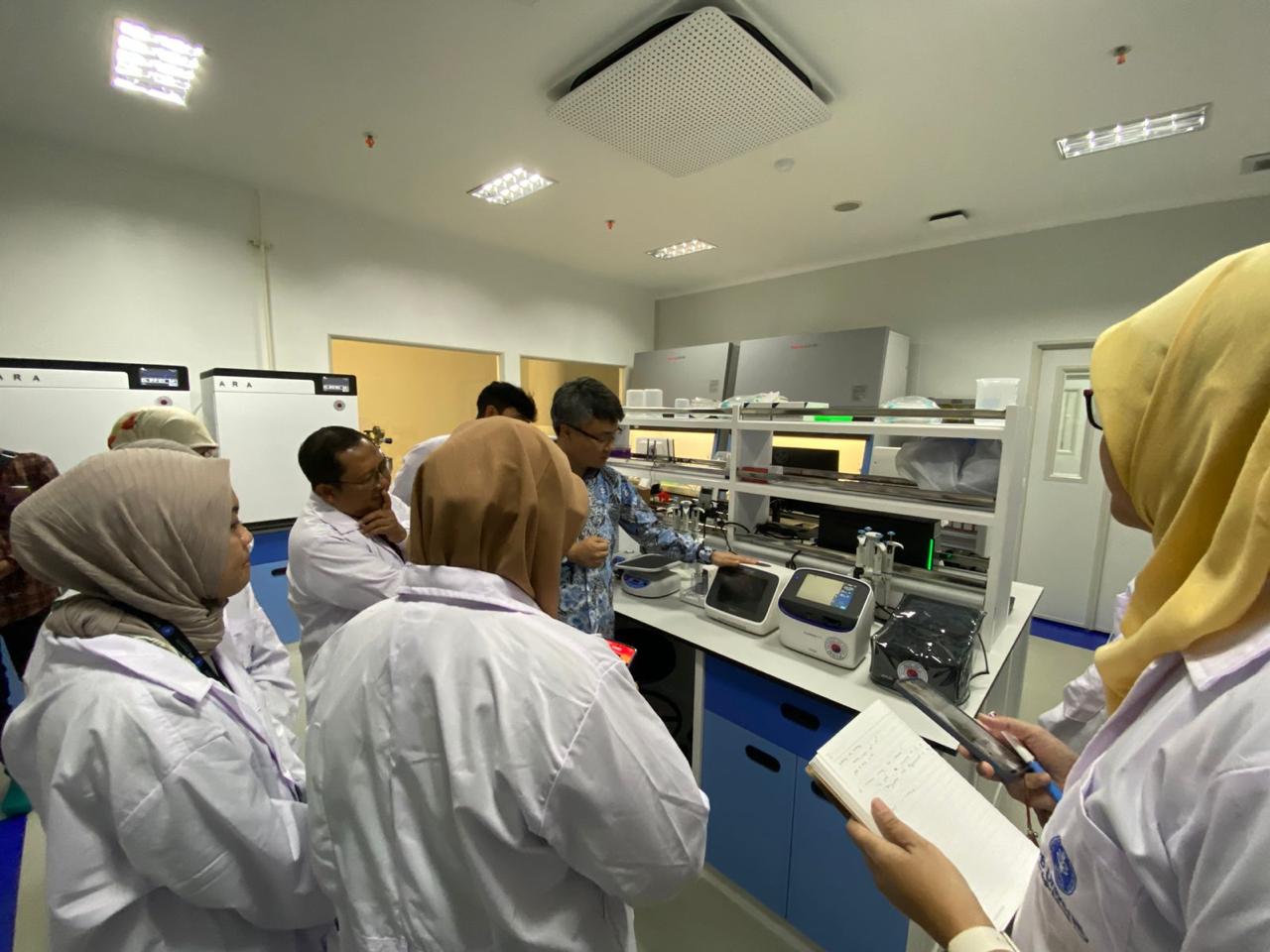
| Laboratory Equipment Procurement | USD 500,000 provided by KOICA; all equipment procured, installed, and inspected. | Completed |
| Animal Cell Culture Lab Opening | Official opening and demonstration in conjunction with the 2nd KOICA–ICAB Steering Committee Meeting on Sep 2025 | Completed |
| Training Programs | 5 mid-term and 3 short-term training programs completed, covering lab safety, management, and instrumentation use. | Completed |
| Academic Degree Programs | 4 IPB faculty members pursuing Ph.D. degrees at SNU; 3 UNTL faculty members studying at IPB (1 M.Sc. completed in Aug 2025). | Ongoing |
| Workshops & Forums | Conducted 3 IPB-SNU Green Bio Science Forum and 6 on-site capacity building workshops | Completed |
|
International Collaboration |
Established Indonesia-Korea Joint Cooperative Research “Sustainable Silvofishery and Blue Carbon Project (SBC Project)” |
Completed |
| Monitoring & Evaluation | Baseline and midline surveys implemented; annual reports submitted to KOICA. | Regularly Conducted |
The project has delivered measurable outputs across infrastructure, education, research, and cooperation components.
| Output Category | Achievements |
| Infrastructure |
|
| Human Resource Development |
|
| Research & Education Activities |
|
| Expert Dispatch & Coordination |
|
|
Communication & Visibility |
|
Visual Summary – Project Outputs
(Culmulative, 2021-2025)

Training Programs Conducted
8 (5 Mid-term, 3 Short-term)

Expert Dispatch
22 times (technical and management)

Ph.D Candidates at SNU
4 (IPB University Faculty)

UNTL Students at IPB University
3 (2 MS graduated)

Workshop and Forums
9 (6 Workshop and 3 Forums)

Nicab Construction Designed
100% (Construction to be Proceeded)

Laboratory facilities remodeled
100% (Advanced Research Laboratory)

Equipment Installed (Procurement)
100% (Animal Cell Culture Lab)
The project operates through a multi-layered partnership structure involving academic, governmental, and industrial cooperation:
| Partner Category | Institutions and Roles |
| Funding & Oversight | KOICA (Korea International Cooperation Agency) – provides grant funding, oversees project progress, and conducts periodic evaluations. |
| Implementing Agency (PMC) | GBST (Institute of Green Bio Science and Technology, SNU) – leads project management, coordinating, research supervision, and training programs. |
| Host Institution | IPB University – manages on-site operations, construction, and academic integration of NICAB. |
| Government Partners (Indonesia) | Ministry of Higher Education, Science, and Technology and Ministry of National Development Planning (BAPPENAS) |
| Academic Collaborators | National University of East Timor (UNTL); universities across Indonesia (UI, UGM, UNAIR, USK, USU, UNAND, ITERA, ITK, etc.). |
| Private Sector Partners | 16 Korean research equipment companies (e.g., Bioneer, Park Systems, Hanil BMS, etc.) supporting technology transfer and facility setup. |
| Outreach & Industry Links | Supported by Daejeon Technopark and Gyeonggi Agro-Fisheries Promotion Agency for promoting academic–industry cooperation. |